
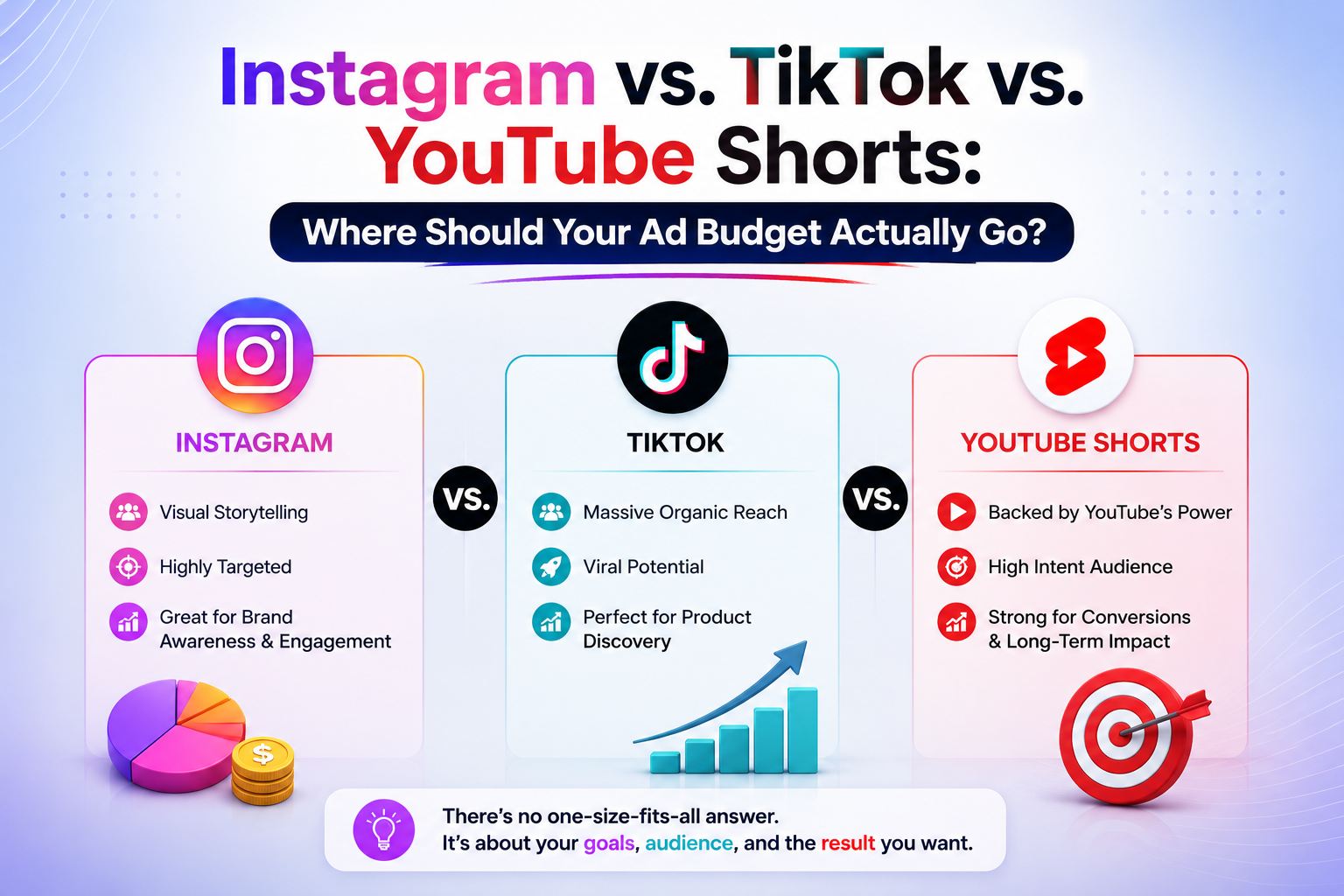
Three platforms. One short-form video format. Very different results depending on what you’re selling and who you’re selling to.
Splitting budget evenly across all three feels safe. It’s usually the wrong move. Here’s how to actually decide where your ad spend belongs.
Instagram Reels Ads
Best for: brands with an existing Instagram presence, visually strong products, e-commerce with a mature catalog.
- Deep integration with Meta’s ad ecosystem, Advantage+ targeting, retargeting, and existing pixel data all carry over
- Strong for shoppable content and product discovery
- Audience skews slightly older and more affluent compared to TikTok
- Works well alongside Feed and Stories placements in one connected campaign
Where it falls short: organic reach for new accounts is harder to build compared to TikTok’s discovery-driven algorithm.
TikTok Ads
Best for: brands targeting younger audiences, trend-driven products, businesses that can move fast and produce native-feeling content.
- The strongest discovery algorithm of the three — new accounts can go viral without an existing following
- Audience skews younger (Gen Z, younger Millennials)
- Rewards raw, authentic, native-style content over polished ads
- Lower cost per impression in many categories compared to Instagram and YouTube
Where it falls short: weaker direct e-commerce integration in many markets compared to Meta’s ecosystem, and content needs to feel genuinely native — repurposed polished ads tend to underperform.
YouTube Shorts Ads
Best for: brands that already produce video content, businesses wanting to combine short-form reach with longer-form nurturing (via regular YouTube), and reaching audiences across a wider age range.
- Backed by Google’s targeting and search-intent data, useful for connecting Shorts campaigns to broader search behavior
- Broadest age range of the three platforms
- Can integrate with existing YouTube channel content and remarketing audiences
- Generally more forgiving of higher-production content than TikTok
Where it falls short: the discovery algorithm, while improving, still doesn’t match TikTok’s ability to surface content to non-followers.
How to Actually Decide
Ask three questions before allocating budget:
1. Where does my actual audience spend time? Don’t guess — check your existing customer base’s demographics against each platform’s core audience.
2. What’s my content production capacity? TikTok rewards raw, fast, native content. Instagram and YouTube tolerate — and often reward — more polished production. Match the platform to what you can realistically produce consistently.
3. What’s my actual goal?
- Direct sales from an existing catalog → Instagram Reels, leveraging existing pixel data
- New audience discovery and brand awareness → TikTok
- Search-adjacent intent and longer nurture sequences → YouTube Shorts
Pro Tip: Test with a small, equal budget split for 2-3 weeks before committing fully to one platform. Let actual cost-per-result data — not assumptions, decide where the bulk of your budget goes next.
Why It Matters
There’s no universal “best” platform, only the best platform for your specific audience, content capacity, and goal. Brands that treat all three the same, running identical ads across all of them, consistently underperform brands that tailor content and strategy to each platform’s actual strengths.
About Big Eye Digital and Media
Big Eye Digital and Media manages paid campaigns across Meta, TikTok, and YouTube, matching platform strategy to each client’s audience and goals rather than applying a one-size-fits-all approach. With $5M+ in ad spend managed across 35+ industries, the team knows exactly where budget performs best for different business types.
Not sure where your next ad rupee should go? Get in touch or book a free consultation.


